
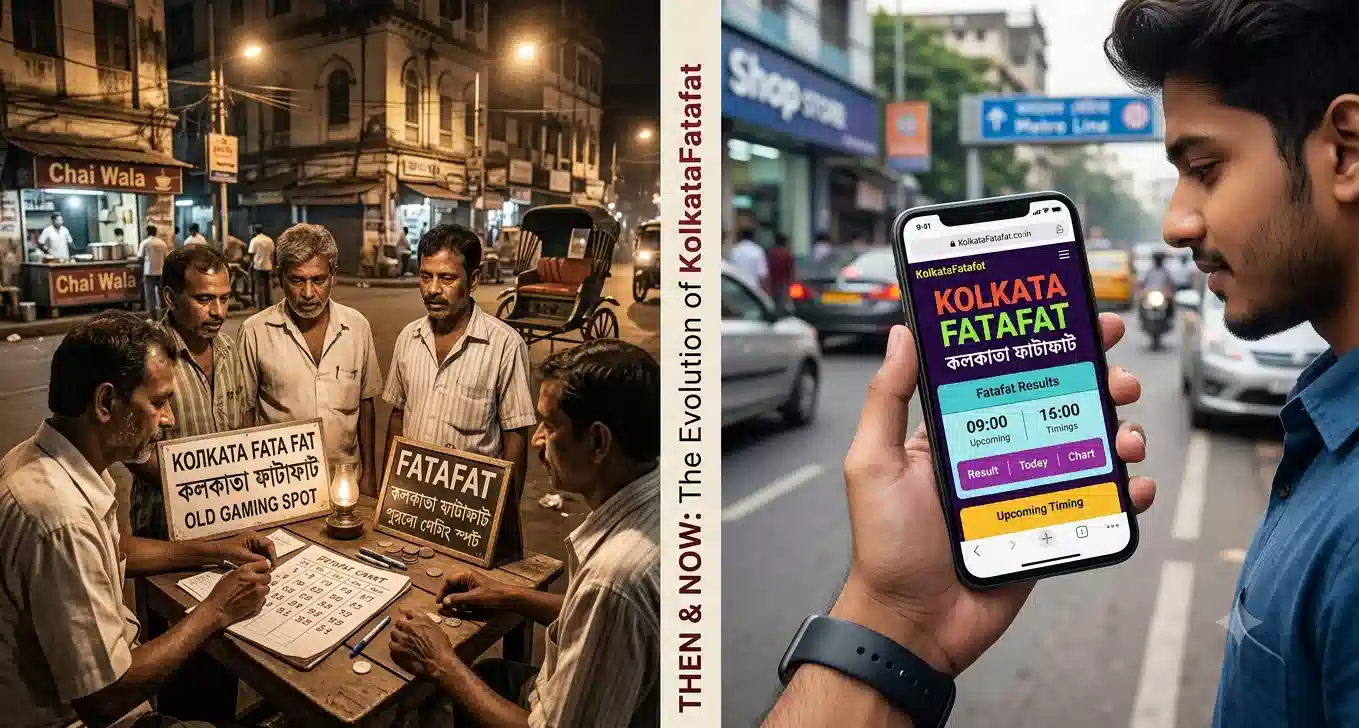
It sounds rather unreal, doesn’t it, to tell the bookie of Kolkata of the 1990s that people are going to be checking their results using touchscreen smartphones while commuting on the subway stations? Correct, it is one of the most amazing transformations throughout the whole history of this game of India. Let’s see how.
Everything Was Based on the Physical Infrastructure at First
At the very beginning of the development of Kolkata Fatafat, everything depended on the physical infrastructure. Bookies were working through paan shops, tea stalls, little kirana counters, or even secret places of the local markets. You needed a person who would have contacts with a bookie and would trust him. Results were being recorded in written registers, payments were being done in cash within several hours, and the disputes were being solved with the help of the community trust. The remote playing was completely impossible because it was impossible to play without the bookie.
Landline Phones Created Extra Opportunities
In the late 90s and early 2000s, people started placing bets via landline phones. Those people who knew the bookie well enough could call, dictate their number and bazi, and pay the money off later. It was a major advance, although the essence of the game remained offline – the customer did not have to come to the counter anymore, but still could do it.
SMS Messaging and the Internet on Mobile Phones
When the mobile phones became cheap enough in the mid-2000s, the whole process became more advanced. The bookies started sending the reports on the results via SMS to their regulars. The people who subscribed for it could get the number of every Baji on their old Nokia right away. This was a huge advance – there was no need to wait in the counter anymore to know whether you won or lost. At the same time, the appearance of the cyber cafes made it possible to publish the results on the websites devoted to this game, thus giving Kolkata Fatafat its first taste of the Internet.
Specialized Websites Were a Huge Advance
Around 2010, the websites publishing the results of Kolkata FF appeared. Any player who had access to the Internet could see daily numbers, patti charts, and even the history of the results on these websites. It means that you no longer needed any personal contact to know about the game. It is at this point that Kolkata Fatafat became more than a mere local betting game of Kolkata and caught the attention of the people from other states.
The Era of the Smartphones Made Everything Digitized Again
The era of the smartphones brought even more changes. With the help of the fast Internet, the websites with the results adjusted to the smartphones, the players started exchanging daily tips in WhatsApp groups, some Telegram channels offer predictions of Kolkata FF results, even the YouTube videos of people like Ghosh Babu explaining how to place the wisest bets. In general, the whole environment of Kolkata Fatafat became accessible via the smartphone. Now people check the results of every Baji right after its closure and the chart of the old results are saved on the cloud servers for everyone to see.
High Technologies Have Changed Nothing in the Game
And now comes the funniest part. All these high technologies did not change anything inside the game at all. It is still 8 Bajis per day (or 4 on Sundays), still a three-digit Patti from which the digit is derived, and still the betting game based on the digit sum trick which Satta Matka was using in the 60s. What changed was the interaction of the players with the game. The street bookie did not disappear at all – he simply works in the WhatsApp group instead of the written register.
Conclusion
The transition from the street corner bookie to the smartphone screen took 30 years and happened in several stages, not in one single leap forward. The game became physical, used phone calls, SMS messages, Internet websites, app, and finally social networks and smartphone app. It may be the key to the cultural longevity of Kolkata FF.
